Tuesday, October 12, 2021

Follow the “5-R” Rule


  • Reduce: First and foremost, REDUCE plastic usage. Find alternatives you can use instead. Lucky for you, this article is packed with simple and practical ways you can cut out plastic in your life.

  • Refuse: When single-use plastics are offered to you, politely REFUSE them. Try to break the habit of accepting that bottle of water or taking the straw that is handed to you along with your smoothie. Just say no.

  • Reuse: When you do end up with a plastic item (it happens to all of us), REUSE it as many times as you can. Give it more than one life.

  • Repair: Something broken? Instead of making it a habit of throwing things out right away, try your best to fix them first. You’d be surprised what a little duct tape or needle and thread can do.

  • Recycle: As a last resort, RECYCLE the plastic items you have once they can’t be used anymore. And be sure you’re recycling them properly.

Monday, October 11, 2021

Easy Ways to Reduce Your Plastic Waste Today

 Bring your own shopping bag


The usefulness of these thin and easily ripped bags is extremely limited, yet according to the Environmental Protection Agency, up to one trillion plastic bags are used each year around the world. Although free to shoppers, these bags have a high environmental cost and are one of the most ubiquitous forms of garbage. Bringing your own environmental bag is common but good environmental advice, such good advice that some governments have implemented policies to encourage people to do it. Disposable shopping bags have been banned in a number of places, including states such as Hawaii and California.

In addition to bigger carryall bags, you can further reduce waste by bringing your own reusable produce bags or skipping them entirely.

Stop buying bottled water

Unless there’s some kind of contamination crisis, plastic water bottles are an easy target for reducing waste. Instead, keep a refillable bottle handy.

Say no to straws

Whether for home use or when you’re ordering a drink at a bar or restaurant, plastic straws are often a single-use item that's just not necessary.

Skip the disposable razor

Instead of tossing a plastic razor in the trash every month, consider switching to a razor that lets your replace just the blade or even a straight razor.

Switch from disposable diapers to cloth

If you’ve got a young baby, you know how many diapers can end up in the trash each day. 

Re-think your food storage

Plastic baggies, plastic wrap, and plastic storage containers are worth re-evaluating. Instead of sandwich baggies, why not pack a bento box or Mason jar for lunch? Instead of throwing away plastic zipper bags or wrapping things in Saran wrap, why not use jars or glass containers in the fridge? When it comes to carryout, these types of containers be used instead of disposable ones—although it can definitely take a bit of courage and some explaining to help your local restaurants to understand.


Sunday, October 10, 2021

HOW TO REDUCE YOUR PLASTIC CONSUMPTION


Reduce your plastic consumption


The plastics's invasion of the planet is a reality. Just remember that the plastic waste island floating in the Pacific Ocean now measures 1.6 million km2. If we want to save the planet, the time has come for each and every one of us to take action.

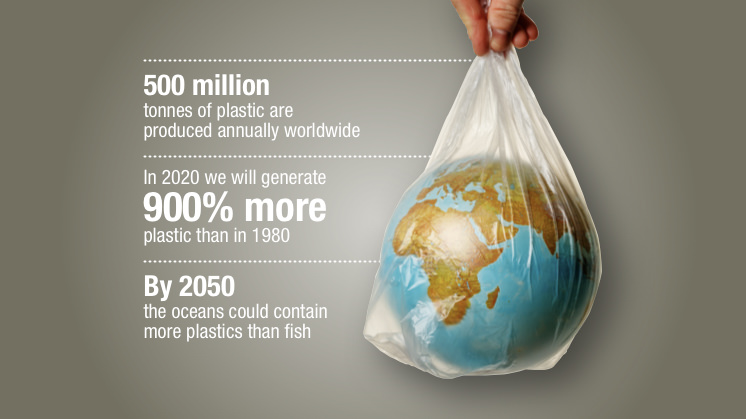
500 million tonnes of plastic are produced annually worldwide. In 2020 we will generate 900% more plastic than in 1980. By 2050 the oceans could contain more plastics than fish.
Plastics are now a serious headache for the planet and it is in our hands to reverse this situation.

Plastic has become a constant element in our lives. It's everywhere: product packaging, cosmetic ingredients, textiles, mobile phones, etc. It's even in the chewing gum you might be chewing on right now! Its omnipresence is such that many would find the mere fact of giving it up a difficult task. Reducing the consumption of plastics therefore requires not only a change in habits, but also a change of mindset.

PLASTICS, A GLOBAL PROBLEM

The fact that plastics are now a serious headache for the planet is proved by the fact that more and more governments are proposing measures to reduce their impact on the environment. In fact, in 2021 Europe will ban the sale of single-use plastics such as drinking straws, cutlery or cotton buds within its borders. To put the magnitude of the problem into context, let's review some objective data:

  • Every year, 500 billion plastic bottles are produced worldwide.*
  • In 2020 we will generate more than 500 million tonnes of plastic, 900% more than in 1980.*
  • Plastic in the ocean is already more than 150 million tons of waste.**
  • By 2050, they could contain more plastics than fish.***
  • Each year around eight million tons of plastic ends up in our seas and oceans.*

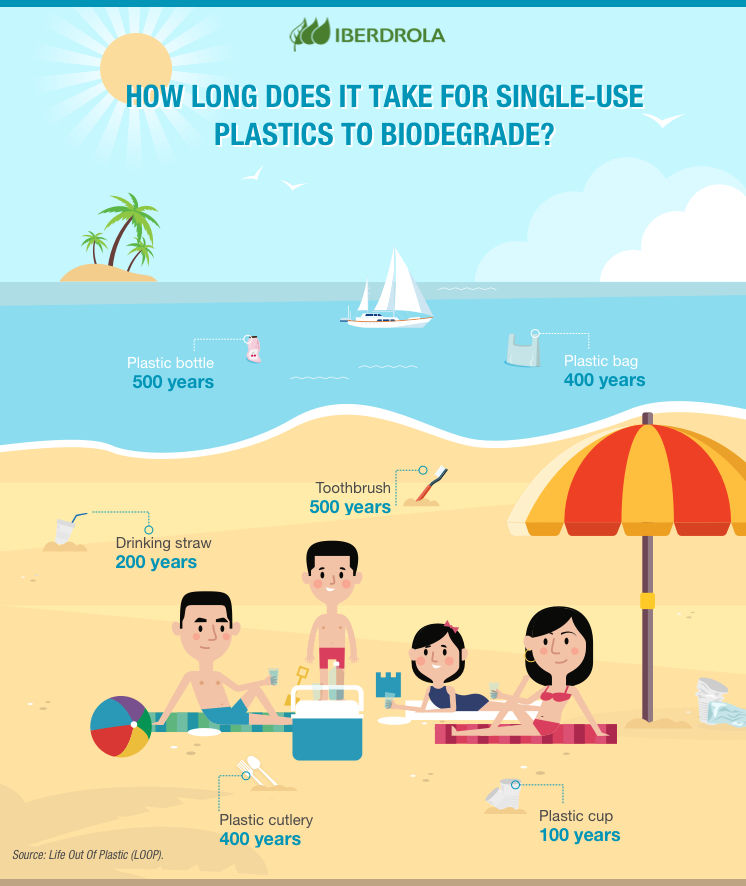
While on the subject of single-use plastics, which account for half of the plastic we use each year, they have an average useful life of 12 to 15 minutes and yet can take up to 500 years to disappear, according to Life Out Of Plastic (LOOP). Plastics outlive us and will outlive our children. The good news is that it is in our hands, as consumers, to turn this situation around. We have the power to make manufacturers change the way they produce. How? By changing the way we consume.

How long does it take for single-use plastics to biodegrade?

 TIPS FOR REDUCING YOUR PLASTICS CONSUMPTION

Minimising he consumption of plastics is much simpler than it seems. Here are some tips that can change your life and the life of the planet:

  Avoid single-use plastics such as drinking straws

Single-use plastics, such as plates and cutlery made from this material, make our lives easier, but seriously harm the planet. These types of products have viable alternatives and there is an urgent need to chose these.

  If you go shopping, remember to take a cloth bag

We go to the supermarket at least once a week to fill up our fridges. If every time we go we use reusable bags (cloth, string or wicker) the health of our planet will improve. From now on remember to take yours when leaving the house.

  Recycle chewing gum... it's also make of plastic!

Most chewing gum currently on the market contains plastic. Try to buy less chewing gum and throw it in the correct recycling container. You can also opt for natural and organic chewing gums.

  Buy more bulk food and fewer packaged products

Disposable containers are inundating supermarkets (polystyrene trays, PET bottles, tetra paks, plastic containers, etc.). But there is an alternative: more and more establishments are offering the possibility to buy in bulk.

  Replace plastic Tupperware for glass or steel containers

If you eat at work, a Tupperware container is part of your day. We suggest you change your routine and opt for glass or stainless steel containers. Not only will the planet appreciate it, so will your health because some of these plastic containers can release harmful substances.

  When hanging out washing use wooden pegs instead of plastic ones

Even the smallest of actions can have a major positive impact on our planet. For example, something as routine as hanging out clothes can become an extraordinary act if we change from plastic to wooden pegs.

  Make those around you aware of the importance of reducing the consumption of plastic

If, in addition to reducing your consumption of plastic, you manage to get your family, friends and co-workers to do the same by setting an example, the impact of your actions for the good of the planet will increase exponentially.

  Pay attention and put your plastic waste in the correct recycling container

Our lifestyle sometimes prevents us from paying attention to details. Therefore, when it comes to recycling plastic waste it can end up in the wrong container. Before throwing your waste away, think where each item has to go.

  Avoid using cosmetics that use micro-plastics, buy a biodegradable brush and wear natural fabrics

The market today offers an array of alternative plastic-free products and the options are increasing. From lipsticks free of micro-plastic or brushes made of wood to t-shirts made of natural fabrics.

  Choose to reuse and give some of the packaging a new purpose

If you have no choice but to buy a plastic bottle or a plastic container at the supermarket, reuse it instead of throwing it away. A bottle can be filled up as many times as you like and containers can be used to store other food.

Follow the “5-R” Rule

  Reduce:  First and foremost, REDUCE plastic usage. Find alternatives you can use instead. Lucky for you, this article is packed with simpl...